CO Car Park Ventilation System: Smart Carbon Monoxide Detection & Automatic Fan Control

Carbon Monoxide (CO) detection and automatic ventilation are essential for maintaining a safer environment in enclosed and basement parking areas. Vehicle exhaust can cause CO levels to increase, particularly in enclosed car parks where natural ventilation is limited. A properly designed CO-based ventilation system can continuously monitor CO concentration and automatically operate exhaust fans according to programmed set points.

Complete Solution from Detection to Automation

At ALVI Automation India Pvt. Ltd. – GasAlarm, we provide integrated solutions combining MSR Electronic, Germany CO Gas Detection technology with PLC/HMI-based control and electrical starter panels for automated car park ventilation systems.

ALVI Automation can support projects with an integrated approach covering:

Site Survey → Application Engineering → Gas Detector Selection → PLC/HMI Panel → Starter/VFD Panel → Installation → Commissioning → AMC Calibration → BMS Integration 

This approach helps building owners, consultants, MEP contractors and facility-management teams coordinate the gas detection and ventilation control system as one integrated solution.

MSR Germany Technology + ALVI Local Support

MSR Electronic, Germany gas detection technology combined with ALVI Automation’s engineering, commissioning and AMC support provides an integrated approach for CO monitoring and ventilation control applications.

Combination of Best Quality and Service Support.

How Does a CO Car Park Ventilation System Work?

The system works as a continuous monitoring and automatic control loop:

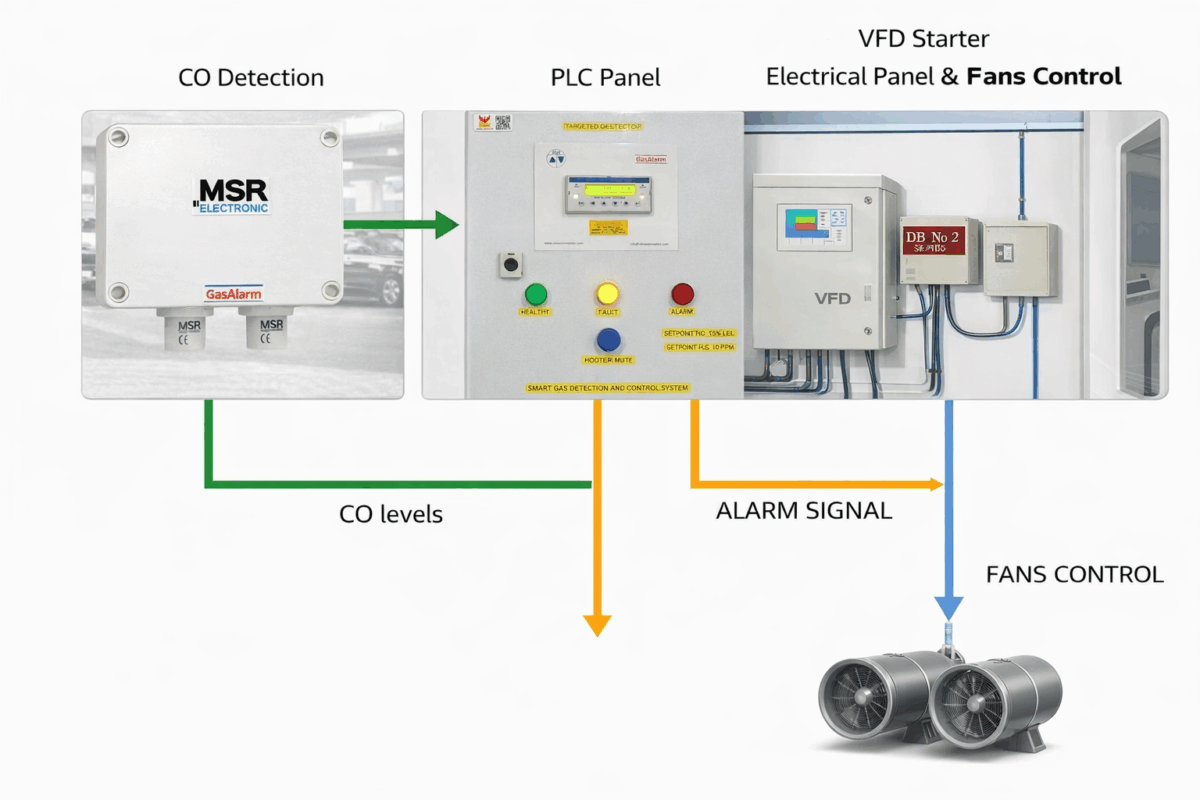
MSR CO Detector → ALVI PLC/HMI Panel → Starter/VFD Panel → Exhaust Fans → Ventilation

1. CO Detection

MSR-GasAlarm CO sensor transmitters are installed at appropriate locations throughout the basement parking area on coloum heeight 1.5m-1.8m.

The detectors continuously monitor the CO concentration and transmit the measured signal to the control panel through the configured communication/output interface.

Depending on the system design, multiple detectors can be connected to a central monitoring and control system.

2. PLC & HMI Control Panel

The ALVI PLC Control Panel with HMI receives the detector signals and displays the status of individual sensors.

The HMI can provide information such as:

  • AI – Sensor-wise CO concentration
  • Alarm status
  • First/second alarm indication
  • Fan operating status
  • Auto/Manual operation
  • Basement or zone identification
  • System fault/status indication

This gives facility and maintenance teams a centralized view of the parking ventilation system.

3. Automatic Fan Control

When the measured CO concentration reaches the programmed ventilation/alarm set point, the PLC generates the required control signal.

The signal is sent to the DOL starter or VFD starter panel, which operates the ventilation fans according to the system design.

With VFD-based systems, fan speed can be controlled according to the ventilation requirement, where applicable.

4. Exhaust & Fresh-Air Ventilation

The ventilation fans extract contaminated air from the basement and discharge it through the exhaust duct system, while fresh air is introduced through the designed fresh-air arrangement.

The objective is to maintain appropriate ventilation conditions while avoiding unnecessary continuous fan operation where automatic control is designed and permitted.

https://images.openai.com/static-rsc-4/HJ9fmgSHlUHrSt7kYXwwL8cN01bLrilIcEt-KuYBDFLHTor4KIrXI_XcQCtcqaMKZkOoycP8Tq5qqp0Fi2WjiLbeDv020PgMUq4Khx0QWRbfqiZb62oVM8SK7aecNbco1Puf53m_rckPoCfBQK9HitYq-2kGeZerUe8CYscJ6-N4vfMr4QpNxJPmmhKbV-oy?purpose=fullsize
https://images.openai.com/static-rsc-4/erF9uAzILTYH4c-0ASRsQ29rSfRxtAjyLV4oR7WSaK5XUEun1ts8EuBfy6C7mvjaQlgYYM-rTy-pxLS01D_BBzvMOMpjO-XwHrCNjBBCVSteH00sLbffKY_qNfK2SG-68l5PwhcAlOuYrOGa49j8uGmxJV4EzW0buYGcSiSjhn0k7Nz3T881D_9rVmWwvhQL?purpose=fullsize
https://images.openai.com/static-rsc-4/Jykxaif8aNmhW8SEdgdb6dkAEKahgOduAyvCq3nBxyAXJ46TuKUVOfcqlsB4El84dLKH_h9WjeuvK5uhLg7HTS67GxNyENjJPPNjOcFaLElm5__Y85CdLJLFXqxndM1QN4om6MryTuN5EhcnDPdIuT05YwZv1h_QZhsI3XsoWP3e46mO4wNBCU2CYypQQtWN?purpose=fullsize
6. Typical System Architecture

A typical installation can be configured as:

CO Sensor Transmitters
↓
4–20 mA / RS485 Communication
↓
ALVI PLC + HMI Control Panel
↓
Control Signal
↓
DOL / VFD Starter Panel
↓
Exhaust & Fresh-Air Fans
↓
Basement Ventilation

The system can also be designed for BMS integration, allowing relevant alarms, sensor values and equipment status to be monitored through the building management system.

Applications

Our CO detection and ventilation control solutions can be considered for:

  • Basement car parks
  • Shopping malls
  • Hotels
  • Hospitals
  • Commercial buildings
  • Residential towers
  • Airports
  • Office buildings
  • Multiplexes
  • Multi-level parking facilities
  • Other enclosed vehicle parking areas
VEFSA – Carbon Monoxide Sensor Transmitter

Enhanced CO gas radicals detection by VEFSA – Carbon Monoxide Sensor Transmitter for  Very Early Fire Smoke Alarm Systems very useful for CO  Car Park Monitoring /Ventilation Fan control, also meeting following standards:

  • AS 1668.2 mechanicalVentilation
  • Pollution & Emission Control
  • Green House Gas Saving
  • Also, save Energy for Next Generation
  • Very Eary Fire & Smoke Alarm
  • Useful for the protection of Human life Building, Basement, Plant, Industries.

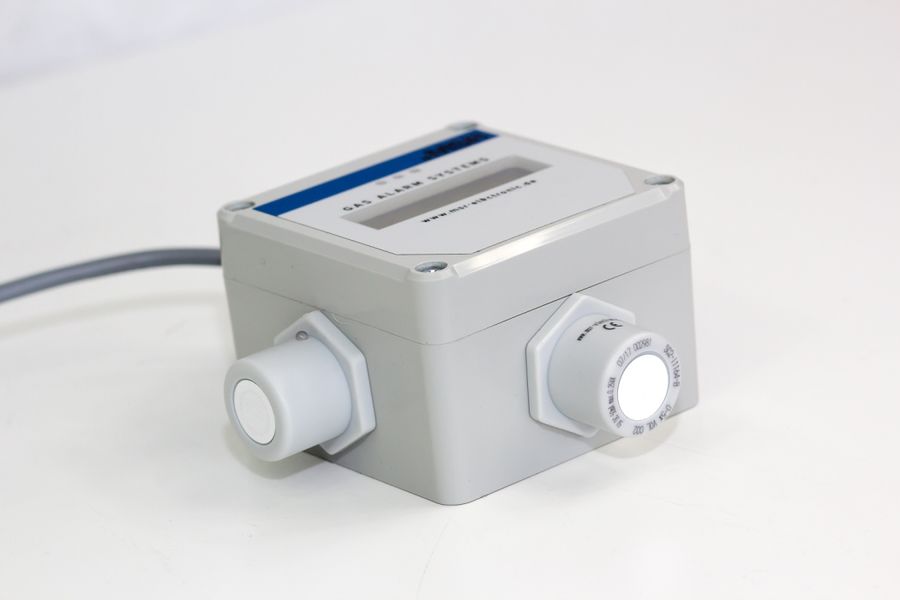
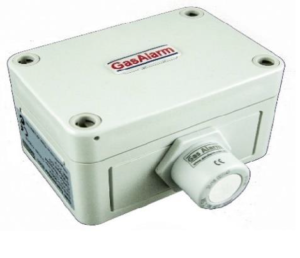
Our Gas-CO-300-D CO Gas Detector/Sensor Transmitters  is capable to detect and measure CO, Smoke & CO+ Enhanced Gas radicals (Fumes before the fire smoke begins)

Gas CO, Carbon Monoxide Sensor Transmitter comes with typical measuring range of 0-100ppm, 0-300ppm, 0-500ppm, having gel-type Electrochemical sensor cell (without any orientation problem), GAS-CO-300-D Sensor Transmitter is a highly responsive,  high accuracy, fast repeatability & high-reliability, user friendly, easy to use model.

Gas-CO-300-D model  VEFSA Carbon Monoxide Sensor Transmitter has a coverage area of 465 Sqm to 936Sqm.

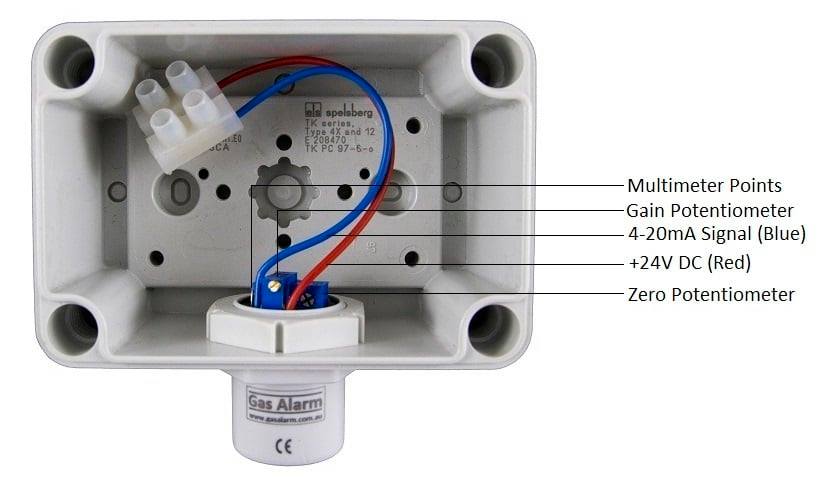
Gas-CO-300-D model VEFSA CO Sensor Transmitter gives analog output 4-20mA or 2-10V, need supply power of 24VDC.

For more details and enquiry please feel free to contact us anytime at – Info@alviautomation.com

“Best Selling” Carbon Monoxide Detector GAS-CO-300-D “on-Sale”

Globally “Best  Selling ” Carbon Monoxide Detector  GAS-CO-300-D  “on-sale ” for the limited period till stocks clear.

German Made GasAlarm model number- GAS-CO-300-D Carbon Monoxide Sensor Transmitter having an excellent high-quality Electrochemical Sensing technology, Top Measurement accuracy, fast response, long service life sensor, two core wiring connection, up to 80% energy-saving, protection class IP65 in economical discounted price range.

Carbon Monoxide Sensor Transmitter Petrol Diesel Vapour Sensor Transmitter Oxygen Sensor Transmitter

Ideal for :
Basement Car Parking area, garages, chiller rooms, and heating, as well as dusty & humid area like pharmaceuticals, coal mine, conveyor belt, cement plant, thermal power plants, flour mills,
powder industries.

Key Points:- 

  • Carbon Monoxide with enhanced CO radical detection capability
  • Very early smouldering fire and smoke detection.
  • VESFA system (very early smoke and fire alarm)

SPECIFICATIONS:- 

  • Sensor Model Available in:  – GAS-CO-300-D
  • Measuring Gas: Carbon Monoxide, Enhanced CO + radicals Detection.
  •  Sensor element (cell):- Electrochemical Diffusion, Electrolyte type Gel-based (no leak, no membrane rapture, no orientation problem & no false alarm)
  •  Measuring Range: – 0-300 ppm (Standard)
  • Connection: – Two
  • Response time T90:-  ≤ 50 Sec
  • Warm-up time (First Time):- ≤ 3 Min.
  • Protection Class Available in IP65
  • Stability & resolution: – ± 3 ppm
  • Sensor life expectancy:- ≥ 6 years (Site Feedback ≥ 11 Years  )
  • Calibration Interval: 1 Year.
  • Sensor Coverage Area: – 700 m2 to 750m2, ideal condition.
  • Humidity non-condensing : 15-90% RH
  • Working temperature:–10°C to 50°C
  • Power supply:-  18 – 28 VDC ( Overload protected)
  • Analog output signal:- Standard: 4-20 mA Linear Output
  • Warranty: 12 Month only on manufacturing defects
  • Guidelines Approval: CE, UL

Please watch simple demo of our Gas leak Control and Monitoring System click here

Carbon Monoxide (CO) Detector – Best German Technology

We are pleased introduce  Carbon Monoxide (CO) Detector – Best German Technology  in most economical cost compare to the  market price of other competitor brand .

As we all know that Carbon Monoxide  gas is also called silent – invisible killer as CO doesn’t have smell, colour  or tase .

Any time you burn something—like gasoline, natural gas, wood, oil, propane, or charcoal—carbon monoxide is released into the air. In outdoor spaces, this usually isn’t a health hazard because there is enough area for the CO to dissipate, so particles never amount to a toxic level. The danger comes when carbon monoxide is released in a contained area like your home, RV, or garage, Car Park, Coal Mines, Industries.

It is most important for everyone to install CO detector in their premises as mentioned above it is best security system of their life and property as CO detector can also intimate you if there is any fire in the premises .

For any enquiry or query please feel free to contact us  in  our mail id – info@alviautomation.com

CO Sensor Transmitter – CO Gas Effect on Health

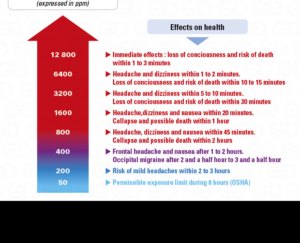
Carbon Monoxide gas is colourless, odourless and tasteless gas that is slightly less dense than the air . It is toxic to hemoglobic animals when encountered  in the concentration above 35 ppm .

CO Gas produce due to partial oxidation of carbon containing compounds; it forms when there is not enough oxygen to form CO2 .

It may produce due to burning of wood (Smoke), from bike, auto, and any vehicle  etc.

It affect human body as per the level of gases in surroundings / environment as defined  in below table –

Effect of CO in Health

People need to be aware of CO gas leakage/ presence in the primicess cause some time it is more hazardous than we imagine .

We at www.alviautomation.com  committed to provide you complete solution of CO Gas Detector and Control Monitoring Systems .

For any query and gas leak detector please feel free to contact us .


Best CO (Carbon Monoxide) Detector & Alarms

Low Pricing, Best Technology, High Accuracy, Long Life, Carbon Monoxide Gas Detector and Transmitter .

Benefits of CO Monitoring:
The very early sign in coal handling/processing plant fire is liberation of gas radicals (CO predominant). The idea is to detect the presence of this CO gas radical for very early fire prevention. By the time smoke is generated and detected it is already too late. A typical CO monitoring system for detection of products of combustion fires or spontaneous combustion of coal fires can warn potential fire two days in advance then flame is present or detected. By installing an effective CO and CH4 monitoring system, coal based power stations can benefit in the following ways:

  • Reduced insurance premiums
  • Better safety to plant and personals
  • Reduced down time
  • Prevention of loss of resources
  • Save time and money.

Why CO monitoring? :
Coal contains moisture which when liberated, coal gets oxidised, generating both heat and carbon monoxide. This heat when builds-up has the potential of creating spontaneous combustion of coal fires.
Coal is extremely friable and can be easily crumbled or pulverised. Further coal also generates coal dust needing extra preventive measures like proper maintenance of stockpiles, guarding against accumulations of coal in the fuel-handling system, compaction of stockpiles, cleaning spills and washing float dust. The most effective programme for fire-prevention would be to have Carbon Monoxide Monitoring and Control System
CO Monitoring Installation Aspects:
There will always be some safe background CO levels in coal handling or processing plants under normal operating conditions. These CO levels will rise during coal loading, handling and will again settle to normal levels once loading is finished and ventilation fans are running. It is important to find out the normal background CO levels by installing CO data-loggers and observing the CO generation trends under normal operating conditions of the plant. A typical CO level of 50 ppm of CO is normally present in background levels when coal is being handled, moved or transported. Based on these normal background CO levels the sizing/selection of the CO system (range etc) and alarm set points need to be undertaken.

Location of Sensors:
In general, it is wise practice to locate an adequate number of sensors at strategic locations based on knowledge of the potentials for ignition. When considering belt fires, sensors should be located in close proximity to drives, tail pieces, and main rollers.
When coal is the issue, any location where accumulation of coal dust or bulk quantities is likely or expected should be considered. These include belt transfers, crushers, dust collection systems, and storage bins (silos, bunkers, etc.).
System Approach:
A typical system may consist of number of CO (range: 0-300, 500 or upto 1000 ppm) and or CH4 (range: 0-100% LEL) gas sensor/transmitters installed remotely at strategic potentially risky areas. The 4-20 mA output coming from these sensor/transmitters can be connected to a multi-channel gas controller which can handle from 2 to upto 96 remote sensor/transmitters. When CO concentration levels rise beyond the set limit (say above 100 ppm, depending on safe background levels), the built in relay contacts will automatically generate audio-visual alarm for plant supervisor to take corrective measure (ventilation fans, mains shut-off etc).

Fore more details Please read our article on CO Monitoring By Mr. Alak Jha  : Articles-COearlyFire-CoalPowerPlants