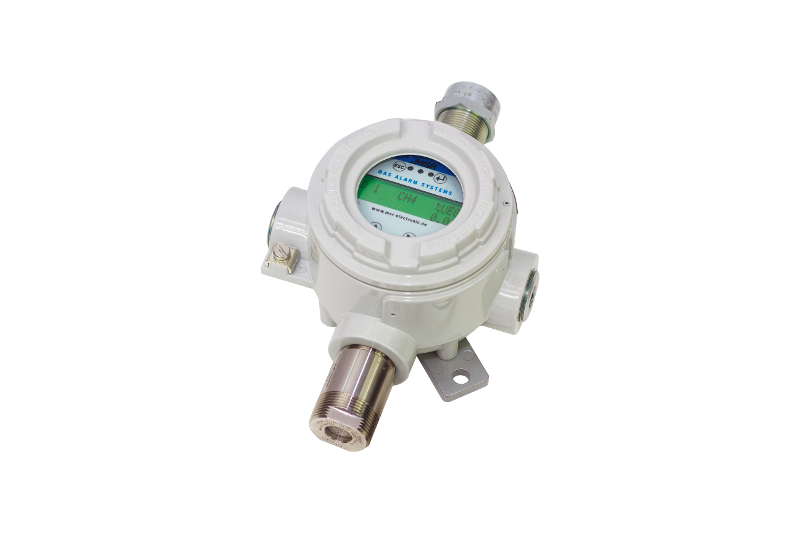
Importance of CO2 Measurment Inside Metting Rooms, Classrooms, Offices etc

CO2 has been a hot topic for a number of years mainly in relation to climate change and government policy. Leaving all of that aside, monitoring and controlling indoor levels of CO2 is important for everyone to consider for health, safety and even energy efficiency.

CO2 is a known indoor pollutant affecting performance in the workplace, at school, and even at the gym. Extreme levels of CO2 can lead to death, particularly in enclosed spaces such as laboratories, some hospital rooms, and breweries. CO2 can have a number of effects on home and workplace health and safety.

Controlling CO2 can also improve building energy efficiency, saving costs by up to 80%, and is even considered in the scoring of Green Star Ratings in building design.

Here, we outline reasons why you should be measuring carbon dioxide levels inside buildings.

1.      CO2 can kill you
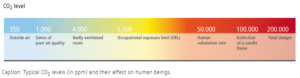
Outside air has a CO2 concentration around 400ppm and each human breath contains around 30,000ppm. CO2 concentrations greater than 20,000ppm cause panting; above 100,000ppm (10%) CO2 can cause tremors and loss of consciousness; and values above 250,000ppm (25%) can lead to death. CO2 can be hazardous in one of two ways: by displacing oxygen in the blood or acting as a toxin.

2.      CO2 can decrease productivity
In the office and classroom, elevated levels of CO2, in the range between 1,000ppm and 2,500ppm, have been found to decrease information utilisation, increase headaches, decrease performance, and increase rates of absenteeism. Generally, CO2 concentrations at 1,000ppm can lead to a statistically significant decrement in decision making performance. CO2 concentrations at 2,500ppm, on the other hand, lead to large and highly significant decrements in decision making performance.

Although CO2 is not the only factor, elevated levels can lead to that feeling of lethargy and tiredness often associated with office workers. Studies have shown that performance, associated with lethargy induced by elevated CO2, can decrease by up to 10% for adults and over 20% for schoolchildren.

CO2

3.      CO2 can increase rapidly in poorly ventilated rooms
Figure 1 shows how rapidly levels of CO2 can increase in a poorly ventilated office. For example, in a 3.5-by-4-metre sized office with a single occupant, CO2 increased from 500 ppm to over 1,000 ppm within 45 minutes of ventilation cessation.


Edaphic Scientific CO2 Levels for HVAC and IAQ

Figure 1. An example of increasing CO2 concentration in a poorly ventilated office with a single occupant.

 Generally, where large numbers of people gather then CO2 will increase rapidly and lead to poor indoor air quality and pollution. In offices, this could be meeting rooms where a number of staff gather for extended periods in confined spaces.

Other places, such as gyms, shopping centres, cafes with soft drink vending machines, or libraries, are increasingly being recognised as indoor environments with elevated CO2 leading to poorer performance.

4.      Some locations have naturally high CO2 levels and need to be monitored
There are certain locations where indoor CO2 in an enclosed room or area can potentially reach extreme and life threatening levels.

Any enclosed or poorly ventilated location where CO2 cylinders are stored or used will potentially have harmful levels of atmospheric CO2. Examples of such locations include laboratories and hospitals.

Other spaces where CO2 is regularly used in the manufacturing or work process are also potential areas of harmful levels of CO2. Breweries are potentially extremely hazardous. Pockets of high CO2 can form in tanks and cellars and can quickly lead to death. Even bars, clubs and pubs, where CO2 cylinders are stored in a room, are increasingly required to monitor CO2 levels for workplace safety.

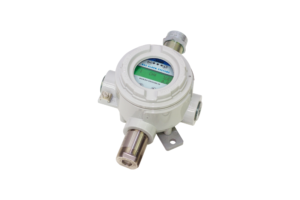
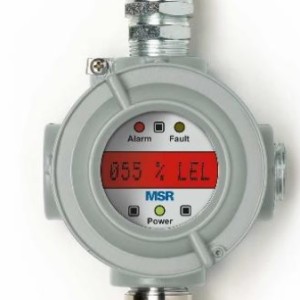
Using CO2 sensors for ventilation control can assist in these cases. However, other systems with audible and visual alarms, such as the  can be installed (Figure 2) warning workers and occupants of dangerous levels of CO2. The sensor is installed in the space with the CO2 source and an alarm indicator is placed outside.

5.      The novelty factor
Measure indoor levels of CO2 is new to most people. In fact, most people would not have a clue what the CO2 levels in their room are, what they should be, and how they change throughout the day with various factors.

Monitoring CO2 levels with a data logger is interesting, or having a wall-mounted or desktop LCD read-out, showing real-time CO2 levels, is also interesting. Informing your guests that you are controlling the ventilation in your building with a CO2 detector will certainly raise a few eyebrows!

CO2 2

In conclusion, a work or learning place designed for optimal productivity leads to better performance and, ultimately, is better for the bottom line. Monitoring and controlling CO2 levels is one approach to a healthier workplace environment by using cutting edge MSR Germany CO2 sensor range detectors.

For More Details and to avail special offers please contact us

Continuous level measurement for use in Liquids

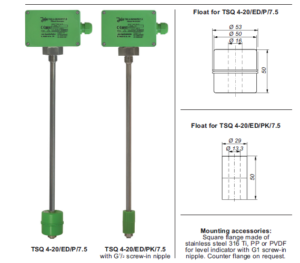
ALVI AUTOMATION (India) Pvt Ltd also trading as GasAlarm Systems a div  of ALVI Technologies Pty Ltd introduces all New Continuous level measurement for use in low-viscosity liquids or liquids with only low solid content in open or closed tanks by JOLA Germany

Level Indicator Consisting of
• sensor:
Switchable resistances activated by float via reed contacts
• transmitter:
A 2-wire module in the terminal box of the level indicator converts the resistance values
into a load-independent current signal 4 … 20 mA.

Working principle :

A float with built-in permanent magnet moves up and down with the liquid level on the probe tube of the TSQ 4-20/… level indicator.

Inside the probe tube, there is a chain made up of reed contacts and series connected resistors. The magnet in the float switches the reed contact(s) which are at the same position as the float. This results in a quasi-continuous height-proportional resistance measurement.

The change in resistance resulting from the upward and downward motion of the float is recorded via a current loop transmitter in the terminal box of the TSQ 4-20/… level indicator and is converted into a load-independent current 4 … 20 mA.

JOLA 2

JOLA 3

Area of application :

The TSQ 4-20/… level indicator is designed for use in low-viscosity liquids or liquids with only low solid content in open or closed tanks. It is not suitable for use in liquids that are prone to deposit formation, adhesion or crystallisation which might hinder the movement of the float on the probe tube. It is also not suitable for use in liquids with permanently moving surface and/or on vibrating machines.

Application Example :

JOLA 4

Clean Room Technology for applications in safety laboratories and in areas protected against contamination

Clean rooms may be found in many areas of industry as well as in clinical environments – for example, in the pharmaceutical industry, the semiconductor and solar power industries, aerospace engineering, nanotechnology, medical engineering, research, pharmacies, etc. Clean rooms are installed anywhere where products need to be protected against contamination from airborne particles.

In order to separate clean rooms from surrounding rooms and to prevent the infiltration of particles, suitable ventilation systems are installed which create a pressure cascade, depending on the classification of
the clean room.

As far as it is required by the product, the room temperature and / or the room air humidity levels may also be measured, recorded and applied as a control variable for the building control system.

The measuring instruments from FISCHER provide the measured values required at the highest degree of precision and with long-lasting repeatability.

Technical Description : 

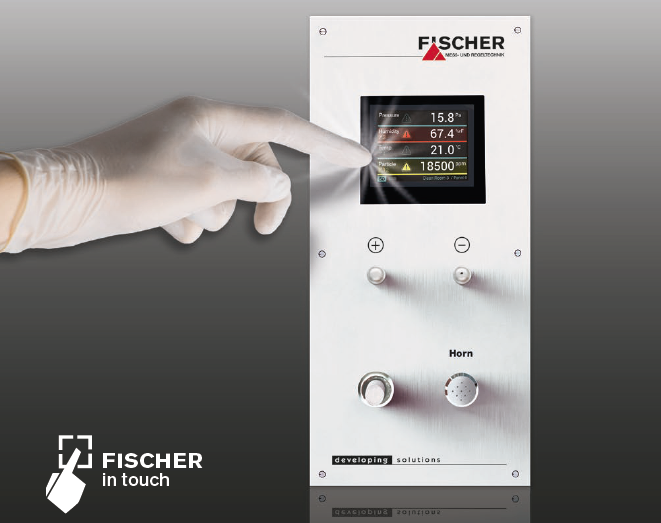
Clean Room Display Panel for pharmaceutical industry

Make: Fischer Germany

Art No: RTW0000000000000D110PXXXX which includes :

 a.       Measured Value Display for panel mounting

       Model no : EA16A40R1S00 with features :

·         Display 3,5″ TFT-Touch-LCD horizontal

·         Design 4-channel (4 inputs, 4 outputs, 4 switch outputs)

·          With relay contacts

·         Data logging (incl. 32 GB micro SD card)

b.      Differential Pressure Transmitter

Model no : DE22L00045B900S0 with features :

·         Measuring range -20…+80Pa

·         Pressure connection push-on for 6/4mm hose

·         Output signal 4-20mA, 2-wire

·         Power supply 24V DC

c.       Digital Humidity/Temperature Sensor

Model no : FF62 with features :

·         Measuring range for Humidity : 0…100%rH

·         Measuring range for Temperature :  -40…+100°C

For more details click here or contact us

Gas Detection in Zone 1 and Zone 2 Hazardous Area.

Hazardous locations are areas where flammable liquids, gases or vapors or combustible dusts exist in sufficient quantities to produce an explosion or fire. Hazardous area are classified in different Zones. Zone 1 is an environment in which there is an intermittent chance that combustible gas will be present under normal operating conditions and Zone 2 is where the presence of dangerous levels of combustible gas only occurs under abnormal operating conditions. At ALVI/GasAlarm, we offer various solutions for hazardous area gas detection for Zone 1 and Zone 2 applications.

The IECEx and SIL2 approved PolyXeta II sensors offers increased optimization and operational safety for your plant.

For further detailed information Please mail us on the below :  info@alviautomation.com

JOLA-Fuel Leakage Detectors

JOLA- Capacitive leakage detectors of the Leckmaster range(for installation in normally dry rooms)

Description : 

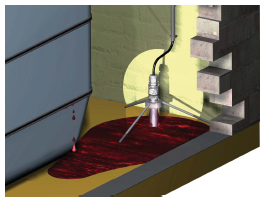
For conductive and non-conductive liquids; can basically be used for the detection of all low-viscosity liquids for such tasks as signalling the presence of fuel oil on the floor of a tank room or in a collection tub located underneath a fuel oil burner.

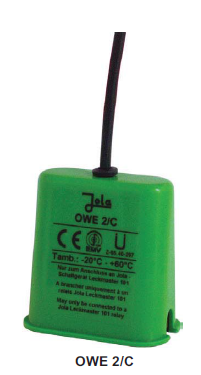
The Leckmaster leakage detectors consist of 2 components:
– a COW/L or OWE 2/C sensor
– a Leckmaster 101 relay.

Example of JOLA Fuel leakage detectors

 
The COW/L and OWE 2/C sensors are designed for connection to the Leckmaster 101 relay. They work on a capacitive basis. If several sensors are used, a separate Leckmaster 101 relay is required for each sensor.

The COW/L and OWE 2/C sensors can be mounted either

JOLA leak detector

– upright on the floor (using the stand offered by Jola as an option)
or
– freely suspended by their cable above the floor.

The COW/L and OWE 2/C sensors should only be used in normally dry surroundings
– e.g. in collection rooms or collection tubs.
The Leckmaster 101 relay is designed for U-bar mounting or surface mounting. The various operating statuses are shown by coloured LEDs.

Areas of application:

  • All organic and inorganic liquids with specific dielectric constants between 1.8 and 109.
  • Prerequisite is that these liquids, dependent on the ambient temperature, are present influid form, and that the sensors to be used will be sufficiently wetted. Response height is approx. 12 mm.
Technical Features :

· Housing : PP and cast resin

· Connecting cable : with 5 metres of black TPK connecting cable

· Functional principle : capacitive sensor with gold-plated capacitor plates on epoxy resin backing material

· Self-capacitance : Ceq = 80 nF + 0.2 nF per metre of connecting cable

· Self-inductance : Leq = 0 + 1 μH per metre of connecting cable

· Protection class for the electronics sealed in the housing : IP 65

· Temperature range : – 20°C to + 60°C

· Response height from bottom edge of housing : ≥ 12 mm (depending on the dielectric constant of the liquid)

For more details click here or contact us

Ethylene Sensor for Fruit Ripening Chamber

Fruit Ripening on Demand

Throughout the life cycle of plants ethylene (c2h4) is used as a hormone to regulate factors such as flower opening and leaf shedding. It is also used to trigger fruit ripening. This mechanism can be used to artificially ripen fruit by exposing them to controlled levels of ethylene gas.
Ethylene is created in commercial ripening rooms using catalytic generators that transform liquid ethanol into ethylene gas. Over a period of between 24 and 48 hours fruit is exposed to the gas at concentrations of between 500 and 2,000ppm.
The ethylene stimulates the fruit to begin the ripening process. By controlling the levels of exposure to the gas the fruit can be brought to the perfect level of ripeness for distribution. Depending on the distance of the distribution center from the stores they supply the fruit can be brought to a suitable ripeness.
Controlling gas levels
Because the levels of ethylene need to be carefully controlled in artificial ripening centers some form of gas monitoring is required to precisely determine the levels of gas. This monitoring system can be set up to automatically control the ethylene gas production as well as ventilation systems to remove excess gas. Alarm systems can be set up to warn of gases reaching excessive or dangerous levels.
Msr ethylene gas monitors should also be installed in areas surrounding the ripening facility to ensure containment and worker safety. Ethylene like many hydrocarbons is combustible, creating a serious hazard. It can also asphyxiate at high enough concentrations and can operate as an anesthetic making it particularly dangerous to humans.
Monitoring gas levels in adjoining rooms will ensure workers are alerted to any leaks or hazardous levels of gas.

Car Park Ventilation Monitoring System

For the air quality monitoring in car parks, ALVI Automation in   association with Alvi- Australia can offer an innovative exchangeable sensor “X-Change” that can be replaced without a specialist company.

Monitoring Car Park Ventilation

Whether in underground parkings, tunnels or loading zones – even the smallest gas leakage must immediately be detected, located and reported. The sensors specially optimized for the different gas types CO / NO / NO2 / LPG work selectively in the defined hazard area.

Our PolyGard®2 sensors in conjunction with sophisticated controllers and obligatory warning devices primarily monitor the air quality required for health and also reliably supervise the plant. Revolutionary exchangeable sensor X-Change provides cost savings and independence.

Gas detection systems must not only meet the latest technological standards, but also the latest legal requirements. From time to time, but at least every 2 years, these gas sensors have to be adjusted or recalibrated in order to ensure proper monitoring.

The necessary calibration of the sensors has been a very complicated procedure so far: the underground garage operator was dependent on an external certified specialist who had to come regularly for the on-site calibration of the sensors, costing a lot of time and money.

Thanks to the exchangeable sensor X-CHANGE the recalibrations becomes a home game. We now send the car park operator the newly calibrated sensor heads on request, which can be exchanged independently according to the principle Plug & Play with little effort and in a short time! This means significant time and cost savings.

At Alvi Automation-India , we offer perfect solutions for the gas detection technology in many applications. Our individually configurable and flexibly integrated solutions ensure the best protection for people and the reliable surveillance of plants in closed buildings in critical situations.

Please contact us for further information.

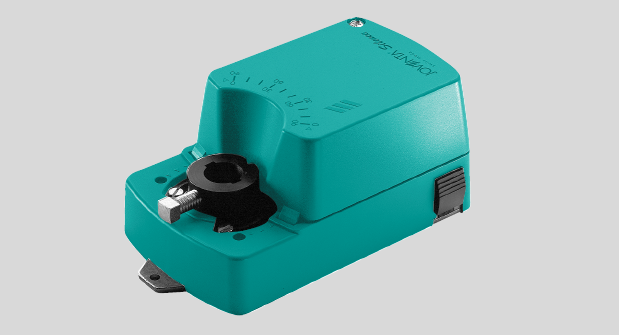
JOVENTA SILENCE electric damper-actuator for ventilation and air conditioning systems.

Application
The JOVENTA SILENCE electric damper-actuator series have been developed to operate small and medium air dampers in ventilation and air conditioning systems.
The compact design and universal adapter fitted with limitation of rotation angle make this JOVENTA actuator highly versatile.
Key features
2- or 3-point control, Load-independent running time Up to 5 actuators in parallel
operation possible Plug-in terminal block connection
Simple direct mounting with universal adapter for fitting to Ø 6-mm to 16-mm shaft or with Z01DN adapter kit for 8,10,11 and 12 mm square shaft.
45-mm min shaft length Selectable direction of rotation Limitation of rotation angle

Manual release button 2 adjustable auxiliary switches See back page for settings.
Automatic shut-off at end position (overload switch)
Energy saving at end positions
Actuators available with 1m halogen-free cable Customized versions available  Devices meet.
CE requirements

MSR Germany Polygard Spc-x3-34xx CO Sensor for Industrial application

MSR Germany Polygard SPC-X3-34XX CO Sensor for a wide range of industrial and commercial applications.

DESCRIPTION:

Gas measuring and monitoring controller based on state-of-the-art micro-technology with integrated sensor and internal buzzer for the continuous monitoring of the ambient air and detecting toxic gases and vapours. The SPC-X3-34XX is provided with an input for one external analog transmitter. 4 alarm thresholds per sensor/transmitter are free programmable. Configuration and operation are possible via the logical, simple system menu structure without specific programming knowledge.

APPLICATION
The SPC-X3-34XX is suitable for a wide range of industrial and commercial applications. Free programmable parameters and set-points enable the individual adaptation to a variety of applications in the field of gas measuring and monitoring.
FEATURES
Continuous monitoring
Integrated gas sensor
Good resistance to poisoning
Long life expectancy
Modular design (plug-in technology)
Standard version with display/LED/keyboard and internal buzzer
Reverse polarity protected, overload-proof and short-circuit-proof
(0) 4 – 20 mA / (0) 2 – 10V analog signal output
2 x relay outputs 30 VAC/DC, 0,5A
1 binary output, 30 VDC¸ 0,05A
4 – 20 mA input for external transmitter
Different housing versions

Continue reading “MSR Germany Polygard Spc-x3-34xx CO Sensor for Industrial application”

Hazardous Gas Detection and Real Time Monitoring Sensor

MSR Germany has a variety of hazardous gas detectors to help you maintain a safe work environment. Choosing the proper gas monitoring equipment for the workplace is important in preventing worker exposure.

Our fixed monitoring systems and MSR controllers with remote gas monitoring sensor/transmitters utilize an array of sensor technologies allowing us to custom design a system that will provide the best solution for our customer’s gas detection requirements.

These various gas detection systems provide continuous real-time monitoring of a variety of hazardous toxic and combustible gases as well as oxygen with certifications like ATEX, SIL2 and IEC-Ex all under one roof.

Applications include industrial, commercial and manufacturing processes, oil and gas, petrochemicals, specialty chemicals, industrial refrigeration, water and wastewater treatment, plastics and fibers, pulp and printing, agriculture, medical and pharmaceutical and much more.

For more details please contact us
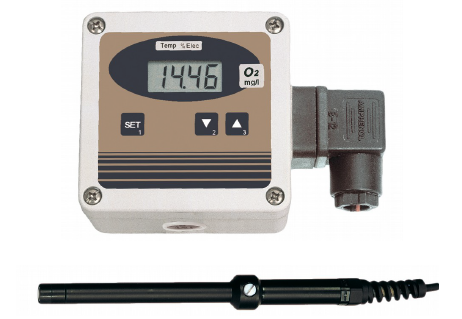
Greisinger-Dissolved oxygen sensor transmitter OXY3610MP-A1-L04

ALVI AUTOMATION INDIA PVT LTD (www.alviautomation.com) a Div of ALVI TECHNOLOGIES PTY LTD(www.alvi.com.au) also trading as       GasAlarm Systems(www.gasalarm.com.au) presents cutting edge German Technology , Greisinger- Dissolved oxygen sensor transmitter Model no OXY3610MP-A1-L04

The OXY 3610 MP measures the oxygen concentration in liquids.
The device can be used in aquaristics, fish farming as well as for the measurement of spring water and well water.

Measuring range :

  • Oxygen concentration : 0.00..25.00 mg/l (solved)
  • Temperature : 0.0..50.0 °C

Accuracy (transmitter)

  • Oxygen : ±1.5 % of meas. value ±0.2 mg/l
  • Temperature : ±0.1 °C ±1 digit
  • Output signal (only O2) : 4..20 mA (2-wire) | 0..10 V (3-wire)
  • Electrical isolation : input electrically isolated
  • Working temperature : 0..50 °C
  • Power supply : 12..30 V DC at 4..20 mA | 18..30 V DC at 0..10 V
  • Permissible impedance : RA [Ω] = (U V [V] – 12 V) / 0.02 mA
  • Permissible load : RL > 3000 Ω
  • Reverse voltage protect. : 50 V permanent
  • Display : 10 mm high, 4-digit LCD-display
  • Electric connection : elbow-type plug (EN 175301-803/A), max. wire cross-section: 1,5 mm², wire diameter from 4.5..7.0 mm
  • Sensor connection : 5-pole screw-able diode socket
  • Calibration : 1-point-calibration at atmospheric air
  • Housing : ABS

   O2-electrode (GWO 3600 MU)

  • Electrode : active diaphragm type with integratedNTC resistance
  • Response time : 95 % in 10 s, depending on temperature
  • Working pressure : max. 3 bar
  • Inflow velocity : min. 30 cm/s
  • Connection cable : 4 m with 5-pole screw-able diode plug

click here to access more details

JOLA Float Switch Model no : SSP 3/K/PVC

ALVI AUTOMATION INDIA PVT LTD (www.alviautomation.com) a Div of ALVI TECHNOLOGY PTY LTD(www.alvi.com.au) also trading as       GasAlarm Systems(www.gasalarm.com.au) presents New cutting edge German Technology , JOLA Float Switch Model no : SSP 3/K/PVC

These floating switches are designed for mounting from the side or from the top. To ensure a correct switching the cable must be fixed at the required height using a stuffing gland, for example, in the case of mounting from the side or using a fixing weight, for example, in case of mounting from the top.

The floating switch SSP 1/K/… or SSP/S1/K/… is equipped with a gold-plated crosspoint contact. One of the characteristic properties of gold-plated contacts is that they can reliably switch the smallest voltages and smallest currents, even after extremely long standstill times. These gold-plated contacts have the following unfavourable properties:

  • The gold layer may become burnt off even after just one-off overload. If this happens, the contact loses its ability to reliably switch the smallest voltages and smallest currents.
  • Extremely frequent switching actions can also impair or destroy the gold layer, leading to the same effects as outlined above.

If you need to choose between an SSP 1/K/… or SSP/S1/K/… with gold-plated contact and an SSP 3/K/… or SSP/S3/K/… with AgNi contact for an AC/DC 24 V application, your choice should be based on the following criteria:

  • Floating switch is seldom in operation but should continue to work reliably even after years: SSP 1/K/… or SSP/S1/K/…
  • Floating switch is frequently in operation, is permanently in action: SSP 3/K/… or SSP/S3/K/…

For more Information click here

IECEx approved gas detection in oil and gas industry

The day-today operational processes in Oil & Gas Industry involve exploration, drilling, production, transportation, storage and distribution in order to yield the refined product.

All such processes are quite complex and are associated with inherent hazards from the combustible of product themselves or toxic gas emission. Gas detection is critical to protect the personnel and plant from such hazards.

The facilities at Oil & Gas could have hazardous levels of explosive gas or vapour that could possibly ignite and cause fire or explosions. The electrical equipment needs to be certified for the area in which it has to be installed.

Such hazardous area that contains combustible or flammable mixtures of vapours or gases are classified according to the likelihood of the flammable mixture being present and the nature of the mixture so present. Gas detectors installed in hazardous areas necessarily has to conform to the area classification for that area.

At GasAlarm Systems, we offer Gas Detection sensors with IECEx approval to withstand the most demanding environments. Our PolyXeta II sensors with IECEx approval is an ideal solution for the gas detection in hazardous areas.

The sensors are classified into three main categories:

  • Polyxeta II series Sensor with Ex demb[ib] Zone 1: For combustible and toxic gases, intrinsically safe, can be opened in Zone 1 without disconnecting
  • Polyxeta II series Sensor with Zone 1: For combustible and toxic gases, with Zone 1 flameproof enclosure
  • Polyxeta II series with Zone 2: For combustible and toxic gases, with Zone 2 flame-proof enclosure

Continue reading “IECEx approved gas detection in oil and gas industry”

Sensor For ventilation and desmoking in parking garages

ALVI Automation(www.alviautomation.com) & Gas Alarm Systems – Australia(www.gasalarm.com.au) in association with  MSR-Electronic- Germany(www.msr-electronic.de),  you can improve the safety, the efficiency and the competitiveness.
MSR-Electronic knows the safety standards worldwide and implements them as one of the first companies in the gas alarm industry, e. g.:
• EN 50545 / SIL 2 / EN 50271
• OVE / ÖNORM Plus EN 50545-1:2013
• CSN EN 50545-1
• UL 2075 / Title 24
Failure protection
The safety systems by MSR-Electronic do not end at the standard and thus increase the failure
protection of your ventilation systems.

Extended safety
Due the application of the latest system electronics from MSR-Electronic not only the service
life of the ventilation systems can be extended. The safety and therefore the building value
will be increased significantly. Thus you absolutely improve the efficiency of your products.

Worldwide safety
The safety of the MSR-Electronic products observes global regulations and standards. So they
can be used in all systems of the world, e.g.:
• EN 50545 / SIL 2 / EN 50271
• OVE/ÖNORM Plus EN 50545-1:2013
• CSN EN 50545-1

MSR MC2 Fluorine(F2) Sensor Transmitter

ALVI AUTOMATION INDIA PVT LTD (www.alviautomation.com) a Div of ALVI TECHNOLOGY PTY LTD(www.alvi.com.au) also trading as       GasAlarm Systems(www.gasalarm.com.au) presents New cutting edge Technology , MSR MC2 Fluorine(F2) Sensor Transmitter

Description :

  • The sensor unit MC2 houses a module with μController, analog output and power supply in addition to the electrochemical sensor element including amplifier.
  • The μController calculates a linear 4 – 20 mA (or 2 – 10 V) signal out of the measurement signal and also stores all relevant measured values and data of the sensor element.
  • Calibration is done either by simply replacing the sensor unit or by using the comfortable, integrated calibration routine directly at the system.

APPLICATION :

The μGard®2 Sensor MC2 is used for the detection of toxic gases or for oxygen monitoring wherever a typical 4 – 20 mA (or 2 – 10 V) signal is required.

FEATURES :

  • Digital measurement value processing incl. temperature compensation
  • Internal function control with integrated hardware watchdog
  • Data / measured values in μC of the sensor unit, therefore simple exchange uncalibrated <> calibrated
  •  High accuracy, selectivity and reliability
  •  Low zero point drift
  •  Long sensor life time
  •  Hardware & software according to SIL2 compliant development process
  •  Easy maintenance and calibration by exchange of the sensor unit or by comfortable on-site calibratio
  •  4 – 20 mA (or 2 – 10 V) analog output with selectable signal output for special mode, fault etc.
  • Reverse polarity protected, overload and short-circuit proof
  •  Housing for integration of the sensor unit
  •  IP 65 version
  • The sensor transmitter is housed in a Rugged enclosure (A housing or D housing) which can withstand Dust, Water splash, vibration knocks. It can withstand Harshest outdoor installation requirement including Mining, Defense and Marins applications.
  • Conformity to

o EN 50271
o EN 61010-1
o ANSI/UL 61010 1
o CAN/CSA-C22.2 No. 61010-1
o EN 50104 (for O2)

Click here to access more details