News Feed.!

Great news #CSIRO Australia, #universityofqueensland are developing and testing #coronavirusvaccine – all hospitals treating #covidpatients #ccpvirus #patients need to ensure #negativepressure #ventilationsystem – how to ensure – use #differentialpressure #switch #transmitter – next ensure #worldclass #safetycriticalsystem #gasmonitoringsystem for #toxicgases #toxicfumes #toxicvapours #toxicaerosols #toxicatomised sneeze coughs to ensure #safebreathableair for #patients and #medicalstaff – now if one is testing #covidvaccine or researching CCPVirus vaccine you still need world-class #gasdetection #gasmonitoring to ensure #healthyairquality #oxygenmonitoring #co2monitoring #carbondioxide and monitoring host of monitoring toxic gases vapors – we at Alvi Gas Alvi Automation India are at the forefront to meet the above design engineering challenges www.gasalarm.com.au

By Alak Jha

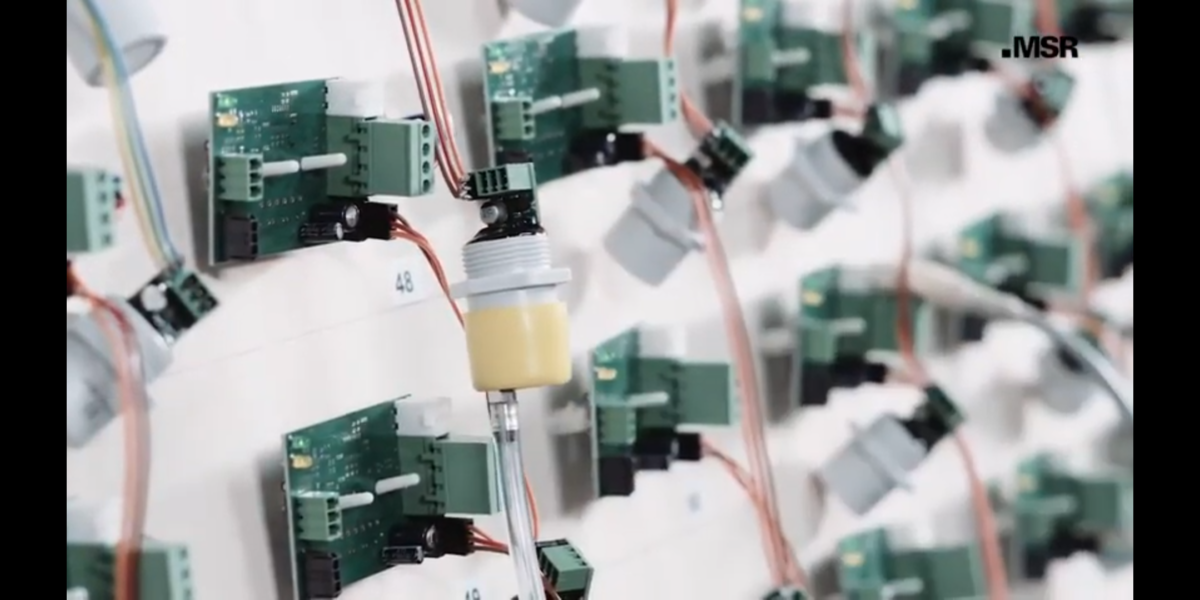
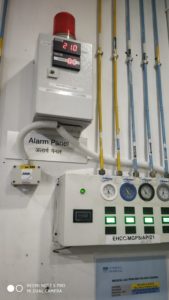
MSR Control Panel
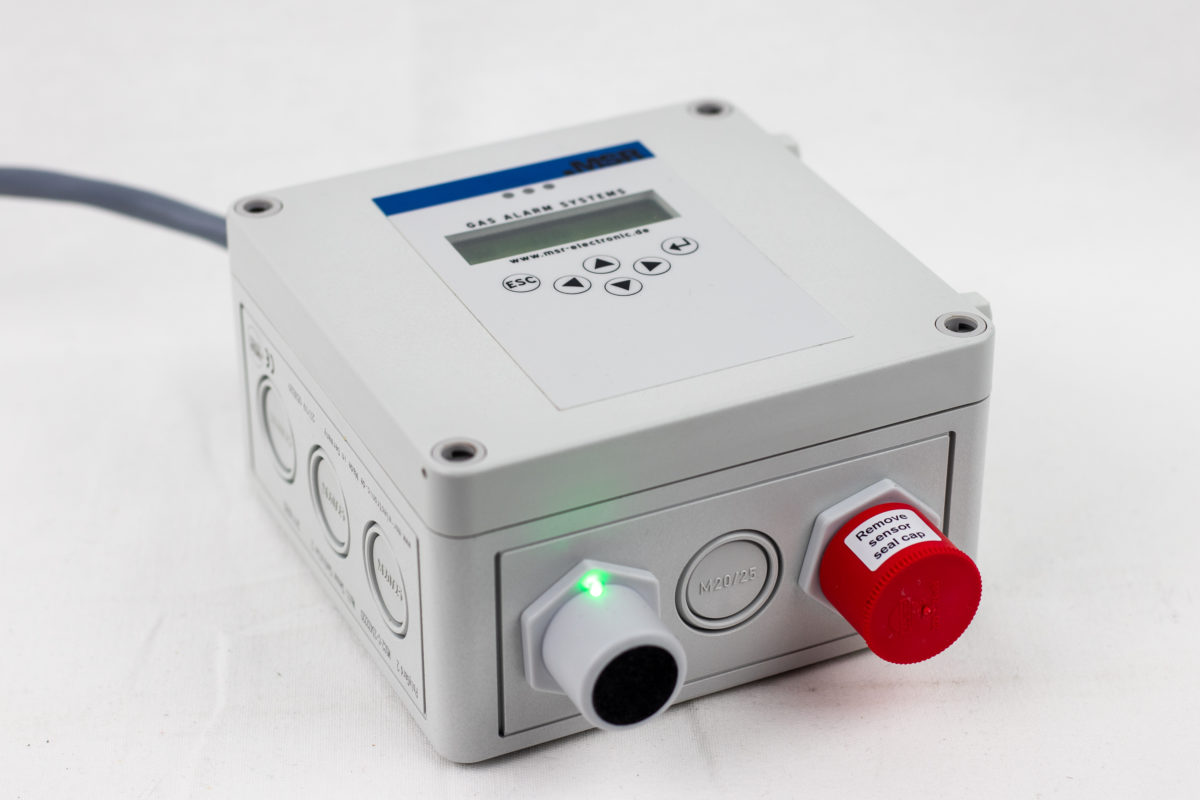
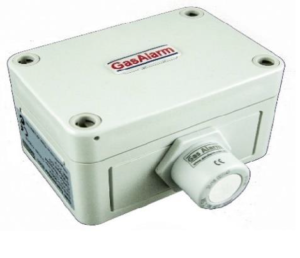
MSR GC06 Controller
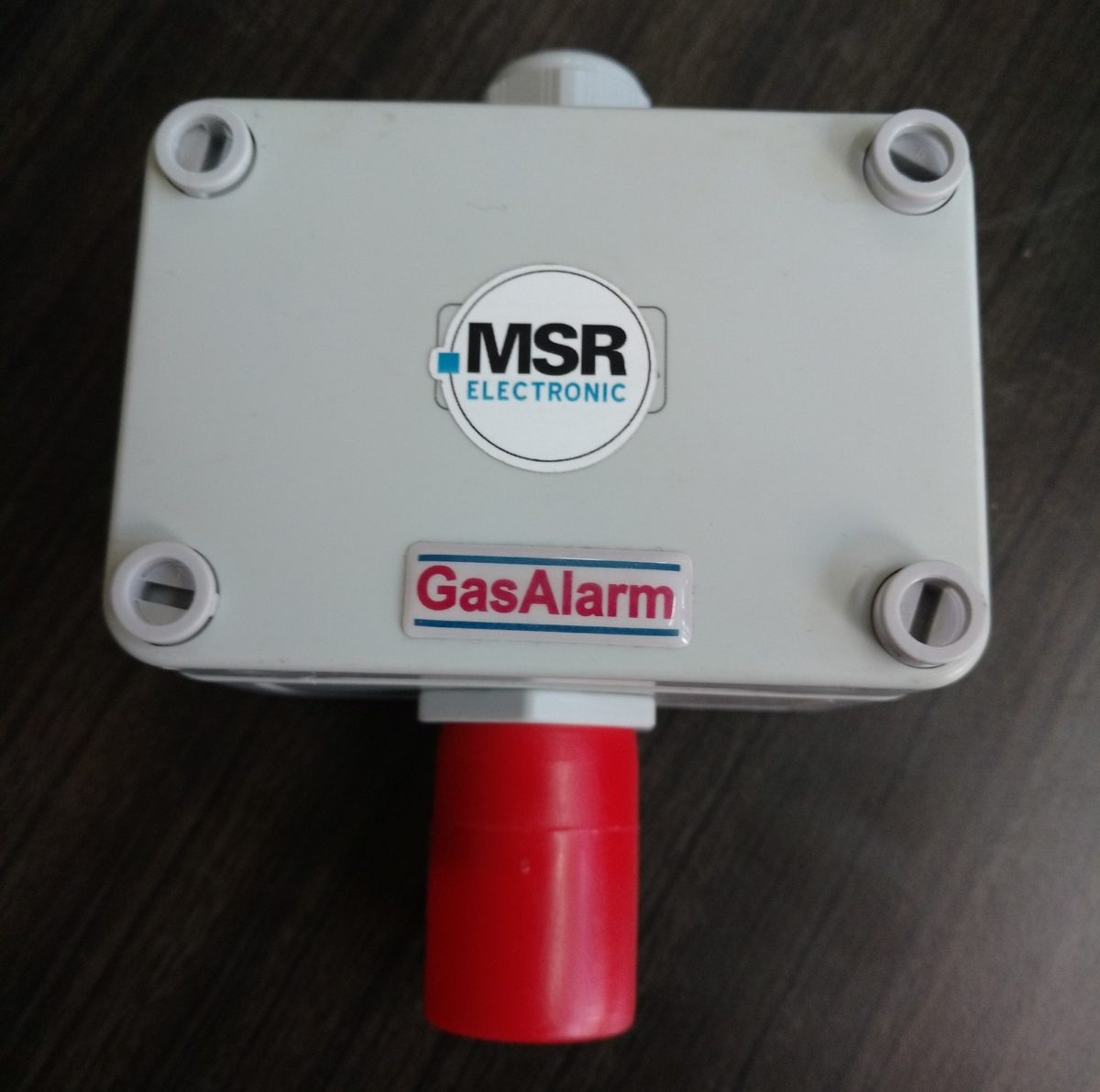
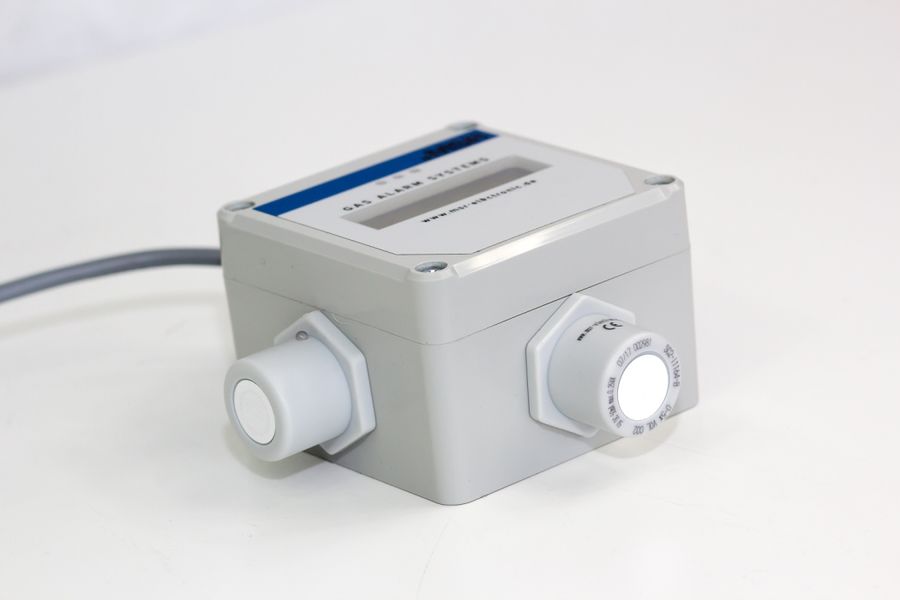
MSR Ex-Proof PX2 sensor

Lets Fight Covid19 Together.!!

The FDA has Approved Emergency use of a new coronavirus test that delivers positive results in 5 minutes and negative results in 13 minutes, with this said all the Hospitals, testingcenters, testlabs, RehabilitationCenters shall be receiving this test facility, along with this we would highly recommend to monitor and control safe breathing zones, air quality index with automatic control of HVAC system, Ventilation Air Control by controlling of fresh air fans, AHU, etc to keep germs and virus at bay and keep our environment safe to carry out the testing efficiently and we have to ensure that these covid19 Hospitals, test facilities are maintained with good temperature, humidity with negative pressure controller environment for which ALVI Automation – GasAlarm India would love to assist you and lets come out from this novelcoronavirus together. iaq  emergency safetyfirst indoorairquality  lifesafety gasdetection safetytraining firesafety energysaving alarmsystems fireprotection controlsystems machinesafety Gas Alarm Systems Alvi Gas MSR-Group GmbH Indian Army GE Healthcare

please feel free to reach us at info@alviautomation.com or contact us

Why Discrete Gas Detection System is Better Than Sampling System.?

In consultation with our Director Mr. Alak Jha from Sydney Australia who has been working in this field since 40 years and worked on this sequential sampling system while he was in Drager, MSA finds that none of the sequential systems works with satisfactory including coal yard application using the Ex-Proof pump by “Miahik” as regular service, maintenance, and replacement of spares is very essential who’s cost factor calculation is almost 3-4 times higher than the discrete-continuous type of system.

Hence would highly recommend going this discrete type of continuous monitoring system with data logging facilities for Application like Fruit Ripening, Cold Stores, Battery room, Server rooms, UPS Rooms, Electrical rooms, etc  

Few things that support the above-said points as follows for Sequential monitoring system :

Problems:

  1. End line filter clogging (Dust filter gets clogged since in India we have a very fine trace of dust available which causes clogging)
  2. Condensate catch point (while drawing samples from long distance which includes Air, moisture, humidity, gases are compressed in a thin pipe which causes condensation)
  3. The pneumatic line is Difficult to maintain leak-free
  4. Tremendous Delay in sequential sampling time which may vary from 5-15 mins depending on the distance
  5. Cost and maintenance factor shall be increased about 3 to 5 time than the discrete type system

Solution:

We would highly recommend using a discrete-continuous sensor transmitter with data logging and remote mobile monitoring and control facility


Should you have any questions please feel free to contact us

We look forward to hearing from you soon

please feel free to reach us at info@alviautomation.com or contact us

Importance Of Calibration Services for Gas Detectors

Avoid Life-Threatening and Critical Situations by Periodic Re-Calibration of MSR Smart Gas Detectors

the system is in alarm, the performance of any audio/visual alarms, signal to BAS or Fire panel.

When the Gas sensor is new it comes out with factory calibration which is done under controlled environments and therefore the Gas sensor will behave according to the characteristics stated in the manufacturer specifications. During use, however, its behavior will gradually diverge from the stated specifications for a variety of reasons. Such reasons include:

  1. Mechanical/Component wear
  2. Effect of dust & dirt
  3. Fumes and chemicals in the operating environment
  4. Changes in weather
  5. Bugs and spiders
  6. Humidity.

The rate of divergence from standard specifications varies according to:

  1. Type of instrument/sensor
  2. Frequency of usage,
  3. The severity of the operating conditions.

There comes a time when the characteristics of the Gas sensor will have drifted from the standard specifications by an unacceptable amount. When this situation is reached, it is necessary to re-calibrate the sensors to the standard specifications. Such re-calibration is performed by adjusting the sensor readings output until it matches the reference gas applied to it Digitally.

Frequency of Calibration

The frequency of calibration depends upon all the above-stated factors. Sensors should be bump tested/calibrated every 6 – 12  months. This allows the sensor to perform optimally and reduce any false alarms and errors. It is recommended that at every calibration/testing sequence of programming should be checked which consists of all the equipment terminated into the gas monitoring system. Mainly these are the correct operation of exhaust fans and fresh air inlet dampers when the system is in alarm, the performance of any audio/visual alarms, signal to BAS or Fire panel.

All Gas sensors are equipped to be calibrated for a certain number of times. This derives the life expectancy of the sensor cell. All sensors have an expiry date or better-called shelf life. This shelf depends upon the gas type sensor is detecting and type of sensor. Under certain conditions, the life span range of some of the common gas type sensors by MSR Germany GmbH are as follows:

  • Carbon monoxide (CO): > 6 years
  • Nitrogen dioxide (NO2): > 2 years
  • Oxygen (O2): >2 years to >7 years
  • Combustible (CH4, H2, etc.):  >3 years

In the end, We would like to conclude that, as these systems are located in your building/ Industrial premises, it is advisable to educate supervisors or maintenance personal. This can avoid many incidents and damages. Proper commissioning of new systems, field calibration of new/existing systems, an inspection of a sequence programmed (standard or customized) and inspection of all equipment (ventilation, audio/visual alarms, BAS, Fire panel) tied with our gas monitoring system should be checked.

The best preparation for tomorrow is doing your best today. – H. Jackson Brown Jr.

For more details please email us to into@alviautomation.com or contact us 🙂

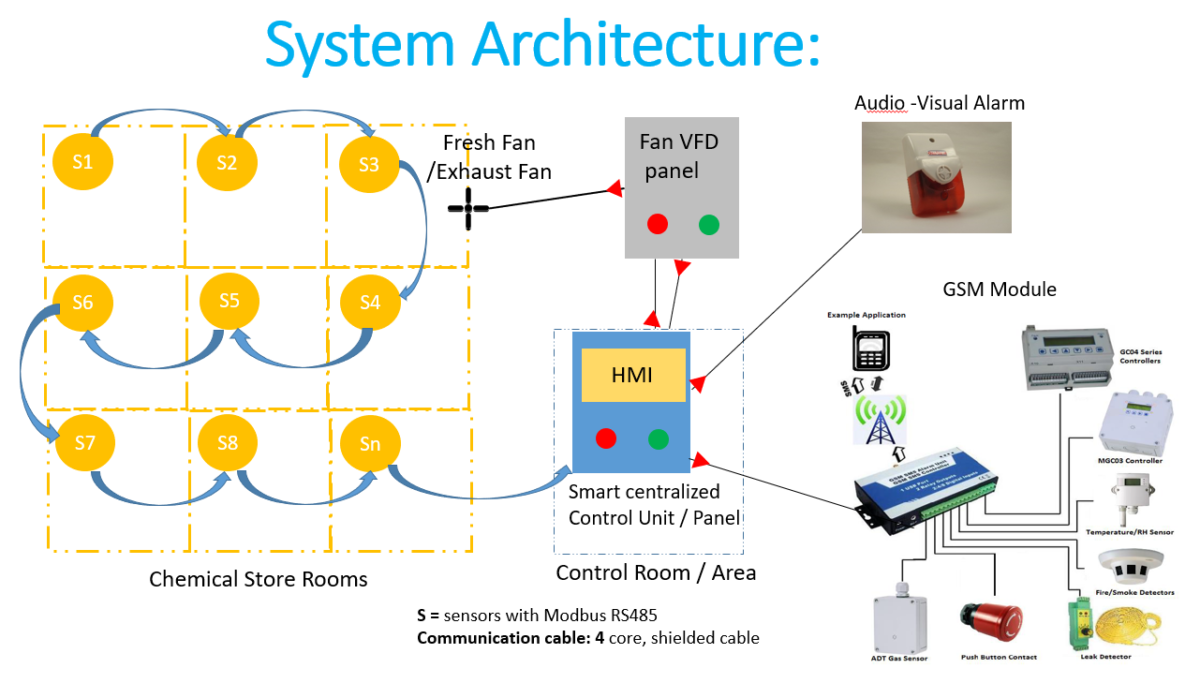
Save Your Chemical Store Rooms from Hazardous Incidents Using Smart GSM Based System

Introducing our Smart GSM Remote Controller & Alarm System 

Typical applications
The voltage-free relays can be used with our other GC-series controllers to add remote functionality to a control system. The device can be paired with other controllers as well and a range of application for the device is mentioned below:
1. Security Alarm System applications;
2. Supervision and monitoring of alarm systems
3. Automatic monitoring system;
4. Vending Machines;
5. Pumping Stations;
6. Buildings and Real Estate;
7. Weather Station’s remote control and data logging;
8. River Monitoring and Flood Control remote control;
9. Oil and gas pipelines remote control and data logging;
10. Corrosion protection
11. Valve controls;
12. Wellheads;
13. Energy-saving, street lights control system;
14. Tanks, levels, temperatures, water leakage applications;
15. Transformer stations; 16. Unmanned machine rooms;
17. Control room application;
18. PLC and Automation System, M2M;
19. GSM Access Control System, GSM Gate Opener, etc.

GMS design

Click here to download the datasheet 

please reach us at info@alviautomation.com for more details 

CO – Carbon Monoxide Sensor for Basement car Parking

When it comes to CO – Carbon Monoxide Sensor for Basement Car Parking MSR Germany/GASAlarm make the GAS-CO-300-D model is the Best techno-commercial option in the International HVAC market.

Now available with a special discounted price for the Indian market with the following details :

SPECIFICATIONS:- 

  • Sensor Model Available in Stock: – GAS-CO-300-D
  • Measuring Gas: Carbon Monoxide, Enhanced CO + radicals Detection.
  •  Sensor element (cell):- Electrochemical Diffusion, Electrolyte type Gel-based (no leak, no membrane rapture, no orientation problem & no false alarm)
  •  Measuring Range: – 0-300 ppm (Standard)
  • Connection: – Two and Three-wire sensor
  • Response time T90:-  ≤ 30 Sec
  • Warm-up time (First Time):- ≤ 3 Min.
  • Protection Class Available in: IP65 (Flameproof and weatherproof )
  • Stability & resolution: – ± 3 ppm
  • Sensor life expectancy:- ≥ 6 years (Site Feedback ≥ 12 Years  )

Continue reading “CO – Carbon Monoxide Sensor for Basement car Parking”

Car Parking CO Gas Monitoring and Fan Control Systems

When it comes to Carbon Monoxide Detection in Car Parking CO Gas Monitoring and fan control Systems, Our  European Standard  MSR CO GAS-CO-300-D Sensor Transmitter has great demands in the global market.

Now available with a special  promotional discounted price for the Indian market with the following details :

Ideal for :
Parking area, garages, chiller rooms, and heating, as well as dusty & humid area like pharmaceuticals, coal mine, conveyor belt, cement plant, thermal power plants, flour mills,
powder industries.

Key Points:- 

  • Carbon Monoxide with enhanced CO radical detection capability
  • Very early smoldering fire and smoke detection.
  • VEFSA system (very early fire and smoke alarm)

SPECIFICATIONS:- 

  • Sensor Model Available in Stock: – GAS-CO-300-D
  • Measuring Gas: Carbon Monoxide, Enhanced CO + radicals Detection.
  •  Sensor element (cell):- Electrochemical Diffusion, Electrolyte type Gel-based (no leak, no membrane rapture, no orientation problem & no false alarm)
  •  Measuring Range: – 0-300 ppm (Standard)
  • Connection: – Two and Three-wire sensor
  • Response time T90:-  ≤ 30 Sec
  • Warm-up time (First Time):- ≤ 3 Min.
  • Protection Class Available in: IP65 (Flameproof and weatherproof )
  • Stability & resolution: – ± 3 ppm
  • Sensor life expectancy:- ≥ 6 years (Site Feedback ≥ 12 Years  )
  • Calibration Interval: 1 Year.
  • Sensor Coverage Area: – 700 m2 to 935m2, ideal condition.
  • Humidity non-condensing : 15-90% RH
  • Working temperature:–10°C to 50°C
  • Power supply:-  18 – 28 VDC ( Overload protected)
  • Analog output signal:- Standard: 4-20 mA Linear Output, also available in 2-10VDC
  • Flammability: – UL 94: V2
  • Warranty: 12 Month only on manufacturing defects
  • Guidelines Approval:  CE/ UL Enclosure.

LPG Detector – Liquified Petroleum Gas Leak Detection Systems

GasAlarm Systems India pleased to Introduce Highly Accurate LPG Gas Leakage sensor transmitter/detector/analyzer in association with ALVI Technologies- Australia &  MSR Germany having following features:

  • Measuring range: 0-100% LEL (lower explosive limit), 0-100% Vol (analysis)
  • Available Technology: Pellistor / catalytic bead (flammability monitoring), Infra-red
  • Output: 4-20mA, 0-10V, RS485 Modbus, Lon, BACnet
  • Enclosure: IP44, IP54, IP65, Flameproof, Stainless Steel
  • Certificate: UL 61010, UL 2075, ATEX EExd, ATEX EExn, CE
  • Mounting: wall mountable, duct mountable
  • Installation area: safe area, hazardous area, explosion-proof
  • Reverse polarity protected
  • Poisoning protected
  • Low flashing temperature for longer sensor
  • Modular architecture
  • Manual calibration
  • Expected life: 3 years-15 years
  • Low response time

Application areas: Kitchen, gas bank, bottling plant, booster station, gas store, pharmaceutical, cylinder store, gems processing, heat processing, furnace, engine room, testing rooms, automobile, defense, warship, annealing plant, chemical plants, oil & gas, fire safety, domestic gas pipeline, kitchen, refinery, food processing, cement, bearing, machine industry, swimming pool, combustion area, bakery, commercial, hotels, mines, confined space, gasifier, stockyard, oil wells, biogas plant, landfill, boiler plant, thermal power plants, etc

Gas type available: combustible gas detector, confined space gas detector, gas detection system, gas detectors, gas analyzers, exhaust gas analyzers, biogas analyzers, stack gas analyzer, catalytic gas sensor, combustible gas sensor, gas sensors, hydrogen gas sensor, methane detector, LPG bottling plants, LPG burners, LPG cylinder plant, LPG fuel tank, LPG gas leakage sensor, gas train, LPG gas tanker, LPG station, LPG vaporizer, natural gas alarm, natural gas plants, combustion analyzer, biogas generation plant, biogas generator, biogas power generation plant, biomass gasifier, propane vaporizers.


For More details please feel free to contact us – Infor@alviautomation.com

“Best Selling” Carbon Monoxide Detector GAS-CO-300-D “on-Sale”

Globally “Best  Selling ” Carbon Monoxide Detector  GAS-CO-300-D  “on-sale ” for the limited period till stocks clear.

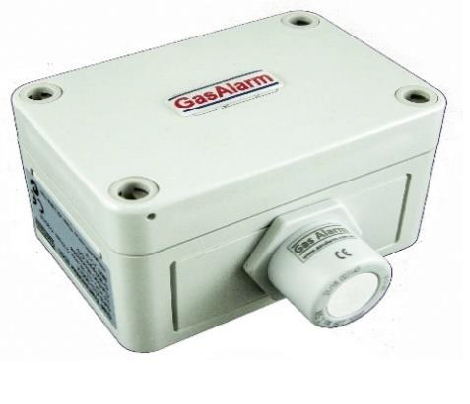
German Made GasAlarm model number- GAS-CO-300-D Carbon Monoxide Sensor Transmitter having an excellent high-quality Electrochemical Sensing technology, Top Measurement accuracy, fast response, long service life sensor, two core wiring connection, up to 80% energy-saving, protection class IP65 in economical discounted price range.

Carbon Monoxide Sensor Transmitter Petrol Diesel Vapour Sensor Transmitter Oxygen Sensor Transmitter

Ideal for :
Basement Car Parking area, garages, chiller rooms, and heating, as well as dusty & humid area like pharmaceuticals, coal mine, conveyor belt, cement plant, thermal power plants, flour mills,
powder industries.

Key Points:- 

  • Carbon Monoxide with enhanced CO radical detection capability
  • Very early smouldering fire and smoke detection.
  • VESFA system (very early smoke and fire alarm)

SPECIFICATIONS:- 

  • Sensor Model Available in:  – GAS-CO-300-D
  • Measuring Gas: Carbon Monoxide, Enhanced CO + radicals Detection.
  •  Sensor element (cell):- Electrochemical Diffusion, Electrolyte type Gel-based (no leak, no membrane rapture, no orientation problem & no false alarm)
  •  Measuring Range: – 0-300 ppm (Standard)
  • Connection: – Two
  • Response time T90:-  ≤ 50 Sec
  • Warm-up time (First Time):- ≤ 3 Min.
  • Protection Class Available in IP65
  • Stability & resolution: – ± 3 ppm
  • Sensor life expectancy:- ≥ 6 years (Site Feedback ≥ 11 Years  )
  • Calibration Interval: 1 Year.
  • Sensor Coverage Area: – 700 m2 to 750m2, ideal condition.
  • Humidity non-condensing : 15-90% RH
  • Working temperature:–10°C to 50°C
  • Power supply:-  18 – 28 VDC ( Overload protected)
  • Analog output signal:- Standard: 4-20 mA Linear Output
  • Warranty: 12 Month only on manufacturing defects
  • Guidelines Approval: CE, UL

Please watch simple demo of our Gas leak Control and Monitoring System click here

Multi Sensor Indoor Air Quality Detector

Designed for monitoring the indoor air quality of hotels, real estate projects, and civil construction.

Model no: GA-AA18C, GA-AA11C, GA-AA13C

IAQ


Features:

  • IAQ detector designed for economic use  
  • 7-24 hours online real-time IAQ detection
  • Real-time output PM2.5/PM10, CO2, TVOC, and Temperature & humidity data  
  • A special correction algorithm inside to ensure the measurements not be affected as environmental change  
  • Modbus RS485 interface
  • Available & suitable for networks in existing and modern buildings  
  • OLED displays real-time data (optional)
  • 3-color lights indicate the 3 ranges of IAQ measurements
  • Wall mounting and 24VAC/VDC power supply
  • RJ45 Ethernet interface product customizable

Application:

  • Smart Home Systems
  • Residential projects
  • Hotels, classrooms, offices and other public places where need IAQ monitoring with civil level
  • Air quality monitoring in other public places  

Click here to download the datasheet 

For more information please contact us or mail us to info@alviautomation.com 

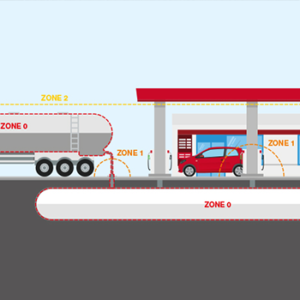
Hazardous Area Classification – Electrical Equipment (ATEX, IEC-Ex, SIL2)

According to 94/9/EC, a device that is to be used in an environment at risk of explosion may only be brought into the market if it satisfies the standards specified in the norm.

Compared with the previous directives, it must be noted that the specification refers not only to electrical but also to mechanical equipment (e.g. cylinders).

Devices are divided into categories and groups to accurately define the conditions of use. This definition is marked on the device and may appear as follows:

download

Fig: Symbols representing in Equipment Marking

Device Groups:

There are 2 groups of devices.
Devices of Group I, Category M are for use in underground mines and their above-ground equipment, which are at risk from firedamp and/or inflammable dust. All other areas at risk of explosion are combined in Device Group II.

Identifier:

EEx defines that this is an electrical device.

Ignition protection class:

This defines which measures are used to ensure explosion protection.
The following ignition protection classes are used:
m = Encapsulation, ia = Intrinsic safety, c = Safe by design
Other ignition protection classes are defined in EN 50014: 1997.
It should be noted that devices in ignition protection class ia may only be supplied from circuits that are certified to be intrinsically safe.

Explosion group:

Device group II is sub-divided into Explosion Groups A, B or C.
This classification is dependent on the typical material properties of the gases and vapors that occur.
The hazard level of materials increases from Explosion Group IIA to IIC. The requirements for the devices increase accordingly. If a device is approved for IIC, it can be used for all other explosion groups. Alternatively, the chemical formula or the name of the material can be stated here.

Temperature class:

It must be ensured that the ignition temperature of an inflammable material is not reached during operation. For this purpose, the maximum surface temperature of a device must be less than the minimum ignition temperature.

For this reason, the maximum surface temperature of equipment for use with inflammable gases, vapors or mists is specified in temperature classes. For dusty environments, the maximum surface temperature is specified in °C.

Temperature class The maximum permissible surface temperature of the equipment (°C)
T1 450 °C
T2 300 °C
T3 200 °C
T4 135 °C
T5 100 °C
T6 85 °C

Category:

The categories define which zones the devices may be used in. The classification states how frequently and in what concentration the ignitable mixture occurs. Furthermore, differentiation is made as to whether the hazard is due to gases, vapors and mists or due to dust.

Category 1:

For devices, which guarantee a very high level of safety.
Intended for the case where an atmosphere at risk of explosion is to be expected frequently or continuously.
Devices in this category can also be used in Category 2 and 3.

Inflammable gases, vapors or mists

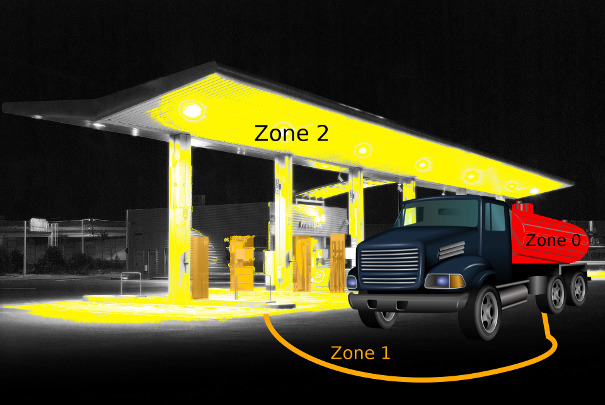
Zone 0 equivalent to Category 1G
Area in which an atmosphere at risk of explosion as a mixture of air and inflammable gases, vapors or mists is continuously or frequently present or present for long periods.

Inflammable dusts

Zone 20 equivalent to Category 1D
Area in which an atmosphere at risk of explosion in the form of a cloud of inflammable dust contained in the air is continuously or frequently present or present for long periods.

Category 2:

For devices, which guarantee a high level of safety.
Intended for the case where an atmosphere at risk of explosion is to be expected.
Devices in this category can also be used in Category 3.

Inflammable gases, vapors or mists

Zone 1 equivalent to Category 2G
Area in which an atmosphere at risk of explosion as a mixture of air and inflammable gases, vapors or mists can form occasionally during normal operation.

Inflammable dusts

Zone 21 equivalent to Category 2D
Area in which an atmosphere at risk of explosion in the form of a cloud of inflammable dust contained in the air can form occasionally during normal operation.

Category 3:

For devices, which guarantee a normal level of safety.
Intended for the case where an atmosphere at risk of explosion is to be expected rather infrequently and, if so,
for only short periods.

Inflammable gases, vapors or mists

Zone 2 equivalent to Category 3G
Area in which an atmosphere at risk of explosion as a mixture of air and inflammable gases, vapors or mists does not normally occur at all or only for short periods during normal operation.

Inflammable dusts

Zone 22 equivalent to Category 3D
Area in which an atmosphere at risk of explosion in the form of a cloud of inflammable dust contained in the air does not normally occur at all or only for short periods during normal operation.

identifying-zone-1-and-zone-2


For more information please write us a mail to info@alviautomation.com 


Indoor Air Quality Monitor PM2.5

Particulate matter (PM) is a particle pollution, which is produced in a great number of ways that can be classified into either mechanical or chemical processes. Traditionally, the environmental sciences have divided particles
into two main groups PM10 and PM2.5. PM10 is particles between 2.5 and 10 microns (micrometers) in diameter (a human hair is about 60 micron in diameter).

PM2.5 is particles smaller than 2.5 microns. PM2.5 and PM10
have different material compositions and can come from different places. The smaller the particle the longer it can remain suspended in the air before settling. PM2.5 can stay in the air from hours to weeks and travel very
long distances because it is smaller and lighter.

PM2.5 can get down into the deepest (alveolar) portions of the lungs when the gas exchange occurs between the air and your blood stream. These are the most dangerous particles because the alveolar portion of the lungs has no efficient means of removing them and if the particles are water soluble, they can pass into the bloodstream within minutes. If they are not water soluble, they remain in the alveolar portion of the lungs for a long time.

When the small particles go deeply into the lungs and become trapped this can result in lung disease, emphysema and/or lung cancer in some cases.

The main effects associated with exposure to particulate matter may include: premature mortality, aggravation of respiratory and cardiovascular disease (indicated by increased hospital admissions and emergency room visits, school absences, loss of work days, and restricted activity days) aggravated asthma, acute respiratory symptoms, chronic bronchitis, decreased lung function and increased myocardial infarction.

There are many varieties of particulate pollutants in our homes and offices. Ones from outside include industrial sources, construction sites, combustion sources, pollen, and numerous others. Particles are also generated by all kinds of normal indoor activity ranging from cooking, walking across the carpet, your pets, sofa or beds, air conditioners etc. Any movement or vibration can create airborne particles!

How to improve air quality in your home and office:

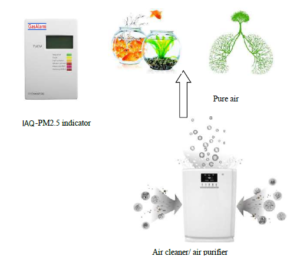
  •  The first thing you need to do is monitoring your indoor air quality every day. The monitoring information will let you evaluate the indoor air quality.
  • The IAQ -PM2.5 will let you know if the steps you are taking to improve your air quality are really working or not especially let you know if a $500 air purifier works any better than a $200 one. This will really help
    you to save money.
  • The concentration of PM2.5 probably has much difference due to the different purpose of the rooms.
  • The most effective way to improve indoor air quality is, detecting each room and treatment of air purification for the important rooms, such as living room and bedrooms.
  • IAQ -PM2.5 supply you a real-time and accurate information, it can help you to be sharp-eyed and clearheaded.
  • Please make sure the filters of indoor HVAC systems are clean, otherwise, need to clean or replace filters. The unclean filter is one of the sources of indoor particle pollution.
  • Please notice it’s very important for the quantity and location of air purifiers or air cleaners. Now you
    need the help of the real-time monitor information of PM2.5 by IAQ-PM2.5.

PM2.5 La

Models
IAQ -PM2.5-300H: PM2.5 Indicator with temperature & RH, 6 colors backlit LCD
IAQ -PM2.5-340H: PM2.5 Indicator with temperature & RH, 6 colors backlit LCD.
Modbus RS485 interface

IAQ -PM2.5 indicator is far different from those built in PM2.5 sensors!

Features of -PM2.5

  • Built-in professional duct sensor with optical IR LED sensing method. Real-time monitor indoor PM2.5 concentration.
  • Built in high accuracy temperature & RH sensor, monitor indoor air
    temperature & RH. Using our unique technology of compensating method, and up to nine calibration points, to guarantee IAQ -PM2.5 measurements accuracy in different environments.
  • LCD displays the real-time measurement and moving average value of PM2, as well as real-time temperature and RH measurements.
  • Special design six backlit LCD for six levels of PM2.5, in straight and clear read.
  • long-term security power supply: 5VDC with a power adaptor
  •  Option: RS485 interface with Modbus protocol
  • Users can know very well the indoor PM2.5 concentration, and can easily select an air purifier/air cleaner. Not only see a visible effect of indoor air clean but also have a reasonable use of an air cleaning device.

Click here to access the datasheet 

For more information please contact us  or email us to info@alviautomation.com

CO Car Park Auto-Ventilation Automation Solution

CO Car Park Auto-Ventilation Automation System  comprises:

  1. GasAlarm CO sensor transmitter. 
  2. Smart monitoring and control unit.                                                 GasAlarm GAS-CO-300-X CO Gas Sensor Transmitter Datasheet
  • CO Sensor: GAS-CO-300-D
  • Smart Control and Monitoring Unit

Silent Features:

  • 60%~80% saving on system installation cost
  • Low system maintenance cost
  • Faster installation and termination
  • Easy integration
  • Easy troubleshooting
  • Easy design

Working Principle:

CO Car Park Auto-Ventilation Automation System is specially designed PLC based control unit or programmable control unit for ventilation monitoring & control. It receives signals from various gas detector units, processes and generates control events based on pre-defined parameters. Based on pre-defined logic, it will operate, regulate, stop-start axial / jet fans, alarm units, ventilation system – Fire dampers etc.

Our system is designed on Analog/Digital communication based programmable logic controller (PLC) system. Due to its unique features, we can fetch signals from as high as 256 detector units, connected in 2-wire fashion. Thus, this architecture not only saves huge capital investment on system installation (cable purchase cost, laying cost), but also on design, implementation, integration and maintenance.

With its advanced feature, it can remotely control onboard potential free relays on detector unit, thereby remote triggering the Exhaust Fans/Alarms / Axial fan control etc.

It also offers signal readout of each detection units 24/7, fault recognition in the system, location of fault, location of alarm, in text as well as graphical manner via a Full LCD 7-inch screen. our system  is equipped with a colored LCD display, thus offering onsite user friendly control and system configuration.

With its inbuilt digital output, it can be integrated with fire alarm system to generate a fire signal. 

Key Features of CO Gas detection unit: (Model: GAS-CO-300-D)

    • Capable of providing continuous, online measurement and monitoring of CO concentration in ambient air, ducted air
    • Measuring range: 0-300 ppm CO
    • Based on electro-chemical galvanic (Gel electrolyte) technology with low evaporation rate with gold plated terminals
    •  Capable of monitoring CO+ Gas radicals, for vert early fire & Smoke detection
    • Response time < 30 sec
    • Sensor has high fidelity with no sensitivity of background gases
    • Offer Analog 4-20mA output
    • No affect by temperature, humidity, vibration, moisture and other parameters
    • Equipped with the hydrophobic arrangement as well as maintaining pressure equalization, to protect electronics from dust, moisture, oils and pressure
    • Has the capability to transmit signals over distance 0-1 Km depending on the type of cable used 
    • Fire retardant UL94: V2 rated polycarbonate Enclosure
    • Wall mountable without need of further mounting bracket etc.
    • IP65 protected polycarbonate housing
    • Optional: Duct mountable arrangement.
    • Sensor element poisoning protected
    • Overflooding and overexposure protection
    • Sensor life expectancy > 6 years
    • Capable of mounting in any direction, with no effect on performance, output and life of these sensors (no orientation problems)
    • Reverse polarity and short circuit protection
    • Low voltage operation
    • CE, EMC Directives 2014/30/EU certified
    • Should have immunity to RF/FM INTERFERENCE as per the guidelines of EMC Directives 2014/30/EU
  • Standards and Approval Compliance:
  •  EMC Directives 2014/30/EU
     CE
     IP 65/66 (EN 60529/ DIN VDE – 0470-1)
     Impact Resistant IK08 (DIN EN5012/VDE 0470 segment 100)
     UL508 & CSA C22.2 No. 14-13Certified Enclosure for industrial control Equipment
     UL50 & CSA 22.2 No. 94.1-07 Certified Enclosure for Electrical Equipment

Key Specifications of Controller Unit:

  • Monitor 1 to 256 detection units, based on Analog architecture.
  • Programmable in accordance to the user-defined control logic.
  • 230VAC operational supply, with the auxiliary power supply to connected detection units.
  • Capable of remote control of onboard relays on detection units, to regulate local alarm units.
  • Equipped with a colored LCD human machine interface display unit for – continuous gas concentration at each detection unit, parameter name, location of detection unit, alarm status of each unit, fan status, fire alarm status etc.
  • Capable to detecting signal faults
  • Auto-diagnostic watchdog with built in error code, fault LED indication informing about the type of system error/fault
  • Password protected so that un-authorized persons cannot alter the set parameters
  • Capable of configuring each alarm relay, detection units parameters etc.
  • Capable of configurable multiple alarm levels at each detection unit
  • Equipped with a facility to connect to BMS system via Digital signals 
  • Wall / stand mountable enclosure with IP65 protection against dust and water.
  • Equipped with alarm acknowledgement facility
  • Equipped with facility for auto or manual fan operations
  • Digital output and control signals for fan electrical panels
  • Equipped with facility for integration with fire alarm panel
  • Wall mountable German Quality Rittal panel 
  • Optional: configurable with variable frequency drives for axial / centrifugal fans
  • Optional: configurable with an inbuilt electrical starter for fans

Applications areas:

  • Basement or underground car park
  • Tunnels
  • Furnace, combustion area
  • Incinerator area

For more information please feel free to contact us or mail us to info@alviautomation.com

CO Detector – Perfect CO Detector For Car Park Ventilation & Fan Control

We  ALVI Automation India Private Limited in association with  GasAlarm Systems  Australia (www.gasalarm.com.au) and MSR Germany, specializing in gas detection & monitoring solutions feel pleased to say that we had done lots of successful car park ventilation system projects  all over India as well as in  Australia, Newziland, Sri Lanka, Myanmar, Canada, UAE, and many more countries and found our Carbon Monoxide Sensor Transmitter  GAS-CO-300-D and MSR CO Sensor Transmitter  MA-0-1110-F-B is the best energy saving, accurate, fast responsive, long life and  economical in cost compared to the other brands present in market .

Introducing the GasAlarm Systems GAS-CO-300-D

Most cost optimum sensor transmitter for carbon monoxide – application in car park ventilation fan control, coal mining, coal handling plant, coal washeries, boilers, steel plants, pharmaceutical anywhere gas and coal combustion take place – best very early fire detection due to gas radicals detection – smoldering fires.


Specifications in Detail:

  • 24VDC power with 4-20mA output (current loop)
  • 0-300PPM Carbon Monoxide measuring range
  • Long Life – ≥ 6 years (Life Expected  ≥  10 years)
  • High Accuracy –  ± 3ppm
  • Wiring – 2 wire system (reduce wire cost)
  • Onboard potentiometer for “zero” adjustment
  • Onboard potentiometer for “gain/span” adjustment
  • Multimeter connections for measurement during calibration
  • With “D” enclosure option, rated at IP65
  • Calibration Interval – 12 Months
  • Easy to use with low maintenance cost.

Click here to download the datasheet

For more query and enquiry please contact us: Info@alviautomation.com